
Introducing AI into a Revenue Workflow Platform

Context

Common Room was evolving from a signal aggregation tool into an action-oriented GTM platform. As generative AI capabilities advanced, we identified an opportunity to improve personalization and account research within sales workflows.

The challenge was not whether to add AI — it was how to integrate it into an existing workflow system without fragmenting the product experience.

My Role

  • Co-led early discovery with PM and Engineering on AI placement strategy
  • Defined UX architecture for AI messaging and account research
  • Partnered closely with engineers on implementation tradeoffs
  • Made prioritization decisions following design leadership transition
  • Owned multi-quarter iteration of AI workflows

Client

Common Room

Type

UI/UX Design

Year

2024

Process

The Problem

We needed to:

  • Embed AI into existing workflows rather than introduce it as a standalone tool
  • Support RevOps governance instead of enabling uncontrolled rep-level prompts
  • Maintain clarity in a signal-dense product
  • Balance flexibility with guardrails

Key Decisions

1. AI Placement

Explored:

  • Profile-level generation
  • Workflow-level generation
  • Segment-triggered prompts
  • Admin-managed prompt governance

We implemented:

  • Admin-defined prompts in Settings
  • Rep-level preview within Segments
  • Snippet-based outputs instead of full email drafting
  • Integration with Outreach/Salesloft

This preserved product clarity while enabling scalable personalization.

2. Governance Model

Rather than allowing freeform prompt creation by every rep, we designed:

  • Centralized prompt management
  • RevOps-controlled templates
  • Controlled snippet insertion
  • Clear separation between AI-generated content and human review

This reduced risk while supporting adoption.

Outcome

What Shipped

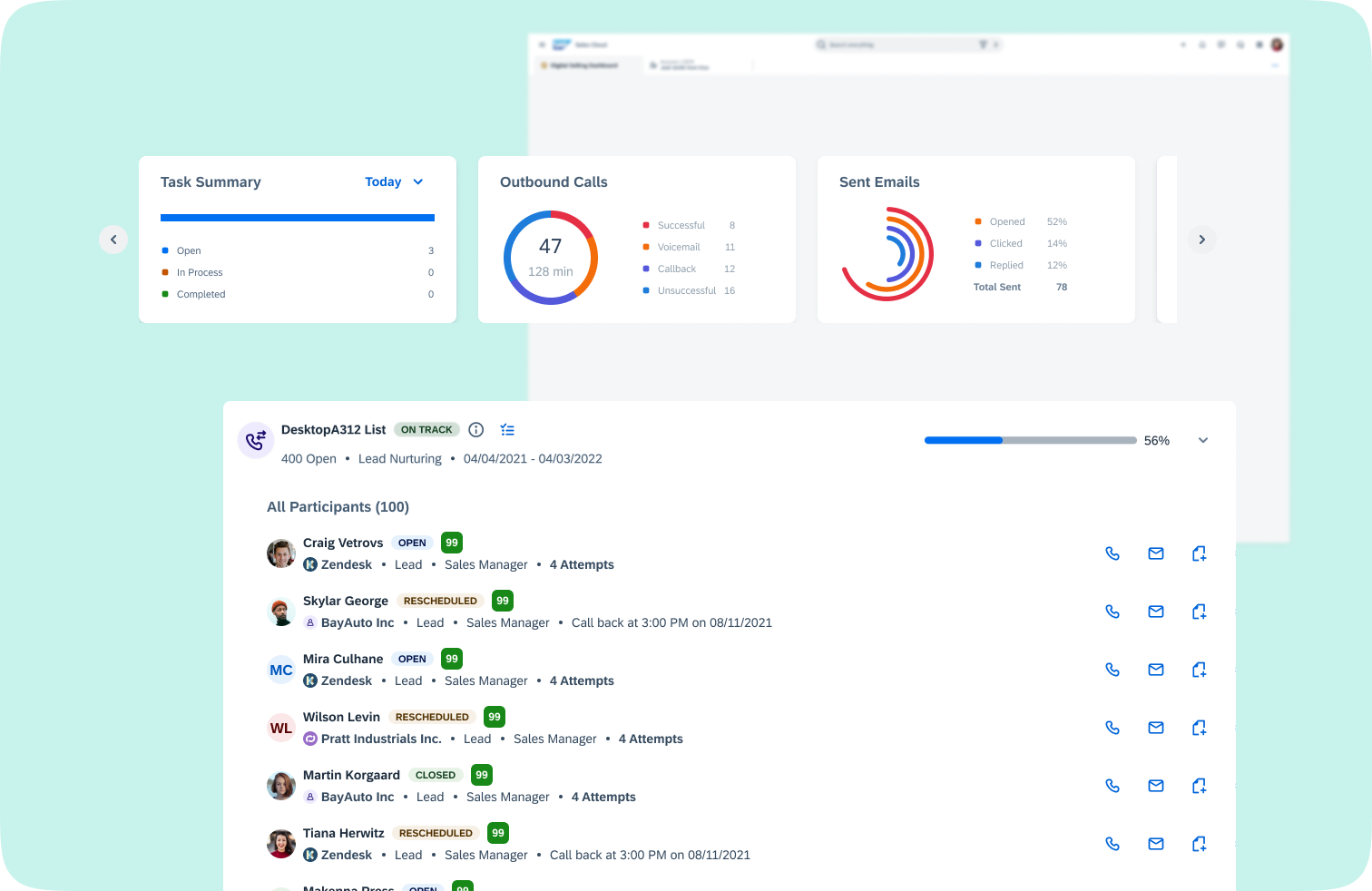
  • AI messaging for contacts
  • AI account research for companies
  • Admin backend for prompt configuration
  • Workflow-based generation
  • Multi-quarter iteration based on feedback

Signal-based auto-prompting remained conceptual due to engineering constraints.
What I Learned

  • AI must integrate into workflows to drive adoption
  • Governance is critical in B2B AI systems
  • Constrained flexibility increases usability
  • Rollout sequencing impacts perception and trust

What I’d Do Differently

  • Instrument usage metrics earlier
  • Validate signal-based automation sooner
  • Improve onboarding for prompt creation
  • Tie rollout more directly to activation metrics

Other work

Want to create something awesome? Drop me an email.

→ Hi@email.com